

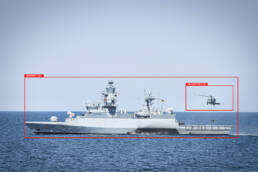
AI-Enabled Mission Modules
Ai-Enable MissionModules
Transforming sensor data into actionable mission intelligence.
↳ Rebooting Aerospacein the Autonomy age
AURYN AI-Enabled Mission Modules provide real-time perception, target understanding and mission support capabilities for defense unmanned systems. Built to operate at the tactical edge, they enable faster decision cycles and greater mission effectiveness in complex operational environments.
→ 01 OVERVIEW
Intelligence at the Tactical Edge
Modern unmanned systems generate vast amounts of sensor data, but operational success depends on transforming that data into timely and actionable information.
AURYN AI-Enabled Mission Modules combine advanced computer vision, sensor fusion and machine learning techniques to support target acquisition, situational awareness and mission execution directly onboard the platform.
Designed for deployment on edge-computing hardware, these capabilities reduce operator workload while accelerating the Observe–Orient–Decide–Act cycle.
→ 02 TECHNOLOGIES
Persistent Target Awareness
Maintain continuous awareness of mission-relevant objects, vehicles and personnel across dynamic and rapidly evolving operational environments.
Precision Target Localization
Transform detections into actionable battlefield information, enabling rapid decision-making, mission planning and coordinated effects.
Multi-Domain Threat Detection
Identify, classify and monitor multiple objects of interest simultaneously, improving situational awareness across complex operational scenarios.
Threat Prioritization and Decision Support
Support operators and mission systems by highlighting the most relevant threats, opportunities and mission-critical targets in real time.
Real-Time Battlespace Understanding
Generate a continuously updated understanding of the operational environment, supporting navigation, planning and tactical decision-making.
Human Activity Analysis
Provide enhanced awareness of human presence, movement and behavior patterns to support force protection, ISR and security operations.
Adversarial Readiness Assessment
Improve mission readiness by evaluating autonomy and perception systems against realistic operational threats, deception tactics and evolving battlefield conditions.
Enhanced Operator Situational Awareness
Deliver mission-critical information directly within the operator workflow, accelerating decision cycles and reducing cognitive workload.
Accelerated Sensor-to-Decision Cycle
Transform raw sensor data into operationally relevant intelligence, enabling faster and more effective mission execution across the full spectrum of unmanned operations.

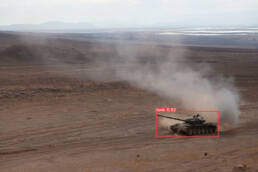
Autonomy & AI (sw+hw)
Discover a modular set of certifiable software products for AI-powered autonomous flight applications.
↳ Rebooting Aerospacein the Autonomy age
A considerable part of our mission is to provide an engineering approach toward certifiable AI, sensor fusion, and physics-aware software applications for autonomous flight across a wide variety of aircraft configurations and use cases.
From unmanned helicopters, multicopters, fixed-wing, and other UAV platforms and system configurations, we offer strategies, technical know-how, and regulatory studies on how to integrate autonomous capabilities into "software-defined, hardware-enabled" systems.
EASA, FAA, and other regulatory organizations are already deploying roadmaps for the certifiability of AI-based, safety-critical systems compliant with stringent regulatory requirements such as SORA, DO178C, ARP for BVLOS operations for civil and military applications.
AURYN Aero is developing an approach toward approvability of perceptual AI in these fields, based on some key concepts that leverage ML and Sensor Fusion Techniques, integrated into all our products:
— Functional Decomposition to provide Safety By Design standards.
— Large-Scale datasets for training ML Models: Reinforcement Learning and Self-Supervision.
— Domain Adaptation and Deterministic Mathematical Model Merging.
— Formal Verification Techniques for AI algorithms.
Explore AI Solutions
We’re developing an approach toward the approvability of perceptual AI in these fields, based on a few concepts that leverage ML and sensor fusion techniques, integrated into all our products.
Our software is compatible with the majority of open-source or commercial hardware and flight control computers, making the integration of autonomous flight functions into legacy systems easier and more cost-effective.