

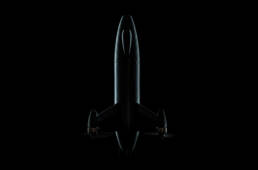
AY-400 Spektre s
AY>400
THE NEW CLASS OF AUTONOMOUS
AIR DEFENSE.
Spektre S
SPEKTRE s
AY>400
HIGH-SPEED ELECTRIC AUTONOMOUS INTERCEPTOR PLATFORM.
The new class of Autonomous
Air Defense.
01
Drone warfare has changed everything.
Shahed-like threats and low-cost loitering munitions are reshaping the battlefield through speed, mass deployment and economic asymmetry.
Traditional air defense systems were not designed for this reality.
SPEKTRE was.
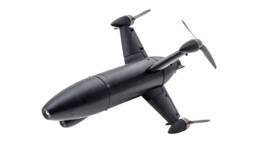
SPEKTRE transforms air defense from a limited strategic asset into a scalable battlefield capability.
Designed to evolve continuously against emerging threats through software-driven capability upgrades.
LOWER COST PER KILL
Modern drone warfare is an economic challenge. Using expensive missile systems against low-cost drones is operationally unsustainable — especially during saturation attacks.
SPEKTRE was engineered to reverse that equation. Its fully electric architecture, fixed optical systems and software-defined guidance stack dramatically reduce interceptor cost while maintaining effective terminal engagement capability against agile airborne threats.
This enables sustained defensive operations against large volumes of hostile drones without exhausting strategic air defense inventories.
⸻ Operational Advantage
1
BUILT TO INTERCEPT
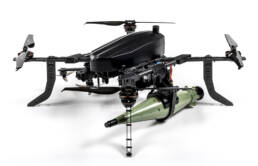
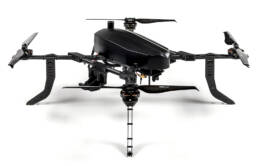
AY-400 SPEKTRE S is a high-speed autonomous interceptor engineered to neutralize low-altitude aerial threats with extreme agility, rapid acceleration and precision pursuit capability.
Compact, electric and software-defined, the platform delivers scalable Counter-UAS capability for modern distributed warfare.
Designed around missile-inspired aerodynamics and advanced intercept algorithms, SPEKTRE combines high maneuverability with low operational cost and rapid deployment capability.
MOBILE AIR DEFENSE
SPEKTRE is designed for distributed deployment across dynamic operational environments.
The system can be integrated on:
▪ Tactical vehicles
▪ Mobile launch platforms
▪ Forward operating bases
▪ Naval assets
▪ Critical infrastructure defense nodes
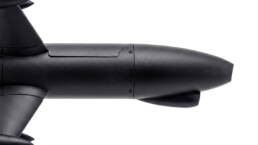
2
FASTER. SMARTER. SCALABLE.
AY-400 SPEKTRE S is a high-speed autonomous interceptor engineered to neutralize low-altitude aerial threats with extreme agility, rapid acceleration and precision pursuit capability.
Compact, electric and software-defined, the platform delivers scalable Counter-UAS capability for modern distributed warfare.
Designed around missile-inspired aerodynamics and advanced intercept algorithms, SPEKTRE combines high maneuverability with low operational cost and rapid deployment capability.
3
SOFTWARE-DEFINED INTERCEPTION
At the core of the platform is a high-speed autonomous guidance system continuously computing optimal intercept trajectories in real time.
Advanced visual tracking and autonomous pursuit algorithms enable:
▪ Precision terminal interception
▪ GNSS-contested operation
▪ Real-time trajectory correction
▪ Autonomous target engagement
▪ High-agility maneuvering
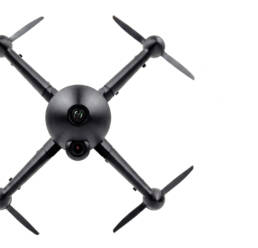

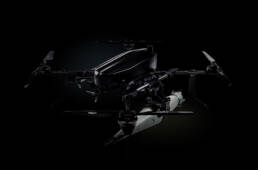
AY-270 Cyberblade
AY>100
TAKE OFF, LOCK ON, STRIKE...
AND REPEAT.
Gladius
Cyberblade
AY>270
RUGGED. RELIABLE.
ENGINEERED FOR SCALE.
Mission-ready tactical drone
platform for Real-Time ISR.
01
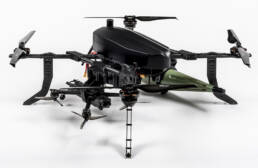
AY-270 Cyberblade is a mission-ready tactical drone platform for real-time ISR, precision delivery and advanced communication relay tasks.
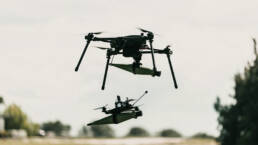
Featuring integrated AI, robust endurance, and full GNSS-denied capability, AY>270 CYBERBLADE adapts to the most severe operational scenarios.
02
Compact, multipurpose aerial system engineered for reliability, scale production, and tactical adaptability.
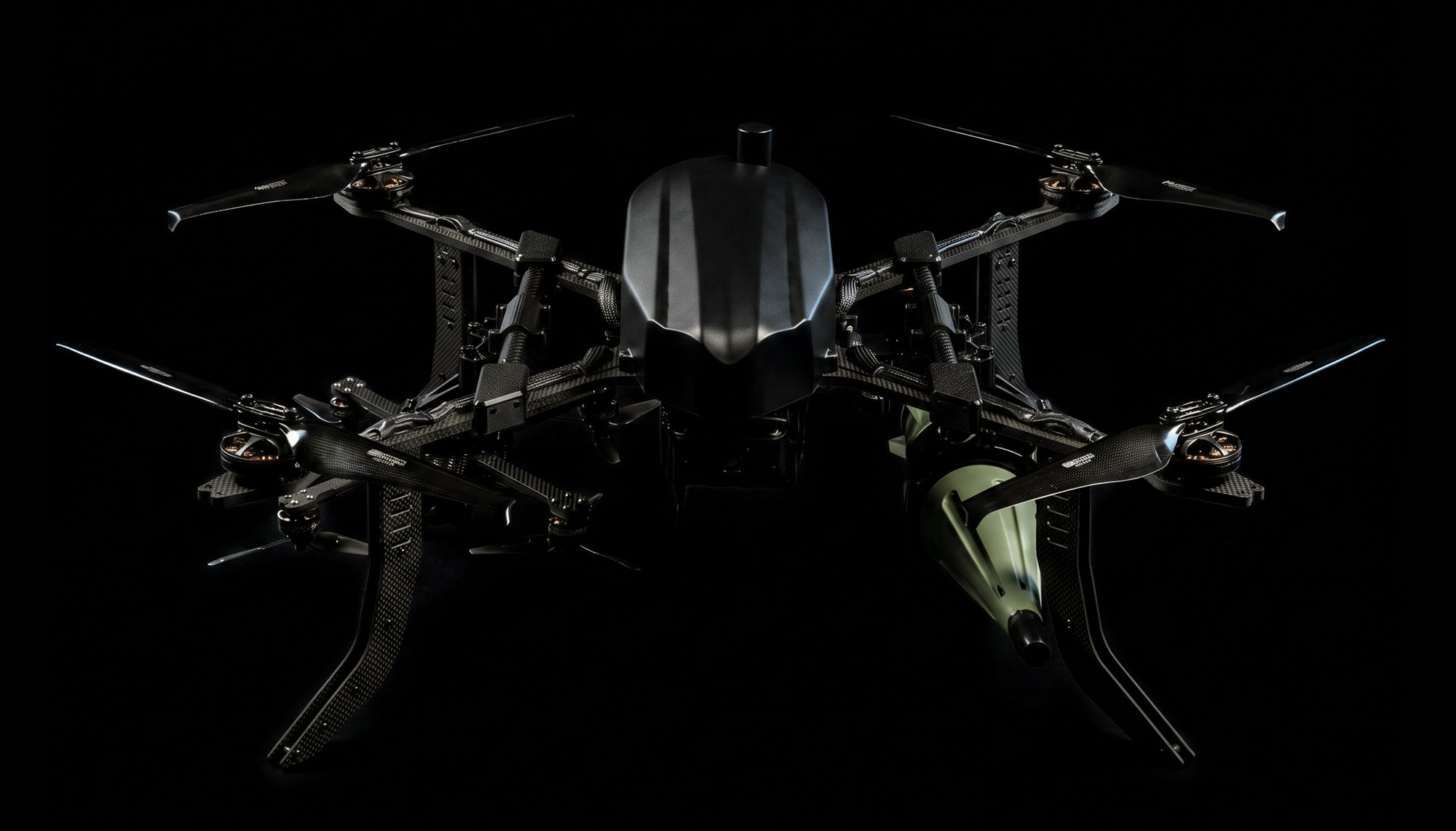


→ Designed to perform under stress and deliver consistent results across mission profiles, CYBERBLADE combines proven hardware with software-defined autonomyto support ISR, logistics, swarm coordination, and tactical support applications.
Built for repeatability and low-friction production scaling, its design-to-manufacture approach that minimizes complexity, optimizes part commonality, and prioritizes reliability under field conditions.
⸻ Operational Advantage
1
Tactical Delivery
→ Up to 4.0 kg payload delivery (2.5 kg standard mission config).
→ Modular cargo deployment: hover-drop, auto-release, remote sync.
→ Medical, signal, payload or jammer pods compatible.
→ Dual-band encrypted video/data relay.
→ Dual-band encrypted video/data relay.
→ Long-range backup via 868 MHz / LoRa / UWB.
→ Optionally integrates 4G/5G or SATCOM modules.
ISR & Target Identification
→ EO/IR tilt camera with FHD live-stream.
→ Auto waypoint navigation and real-time recon.
→ Operates in EW-contested and GNSS-denied scenarios.
Datalink (opt. on request)
→ Dual-band encrypted video/data relay
→ Long-range backup via 868 MHz / LoRa / UWB.
→ Optionally integrates 4G/5G or SATCOM modules.
2
Integrated Avionics
→ Single high precision multi-constellation RT GNSS with multiband helical antenna.
Payload
→ Vertical LiDAR.
→ Analog, digital video transmissions.
→ Analog, digital camera (DJI O3/O4, Walksnail Avatar GT or OpenIPC OS compatible), or thermal (Caddx IRC-640CA, Caddx IRC-384CA or AKK).
→ Nvidia Jetson Orin NX as AI computer.
→ Two 40kg/cm release servos with adapters for different types of payloads.
Navigation modes
→ Up to 20 (Waypoint, Loiter, Position Hold, GoTo, GoHome, Return to Pilot, etc.).
→ Automatic emergency procedures.
→ Programmable SWARMING flight missions.
Datalink (opt. on request)
→ Main control and telemetry frequency bands: 5 GHz / 2.4 GHz / 900 MHz / 868 MHz / 433 MHz, and others.
→ Main drone control type: ELRS or TBS.
→ MANET radio, 4G/5G, WiFi/BLE, LoRa, satellite communication module.
→ Data encryption AES 128/256 bits.
Safety Equipment
→ Direct Remote ID transponder compliant with EU (ASD-STAN EN 4709-002) & US (ASTM F3586-22) standards and regulations.
→ Flight Termination System (FTS) compliant to the MoC2511 for operation in the specific category when Enhanced containment applicable.
→ Programmable RGB LED light for enhanced visibility.
→ Parachute system compliant to the MoC2512 for operation in the specific category.
3
Objects and Obstacles avoidance
→ Object Detection/Recognition.
→ Obstacle Detection.
→ Horizontal Obstacle Avoidance.
→ Vertical Obstacle Avoidance.
Navigation
→ Denied GNSS/GPS Navigation and Complex Environment Navigation.
→ Map matching/Terrain Following.
→ Dynamic Path Planning.
→ Motion Synchronization.
→ Safe Landing Spot Detection and Precision Landing.
→ Horizon Pos. Detection.
Cyberblade
AY>270
Built for forward deployment. Trained to push boundaries. Ready to be automated or networked.
Technical Datasheet
01 / [ AIRFRAME ]
Dimension
60 x 60 x 30 cm
Airframe Material
Full Carbon & 3D Printed parts
02 / [ PERFORMANCE* ]
Max PayloadMax TakeoffMax Flight TimeMax Cruise SpeedMax Wind ResistanceDefault Telemetry Range
Up to 5.5 kg7.9 kg45 min20 m/s15 m/s10 km
Service CeilingOperating Temp. RangeMax One Way (OW) RangeMax Two Ways (TW)Navigation ModesAvionics
3000 m-10°C to +50°C48 km24 kmWaypoint, Loiter, Pos. Hold, Go To, RTHGNSS, Remote ID, swarm-capable
©2026
ALL RIGHTS RESERVED
NOTE: Specifications are subject to environmental factors, aircraft configurations, and flight mission profile.
OUR PRODUCTS PURCHASES INCLUDE COMPREHENSIVE AFTER-SALE ASSISTANCE.CONTACT US TODAY TO BOOK A FLIGHT DEMONSTRATION! THIS PRODUCT, TRADEMARK AND NAME IS UNDER PATENT APPLICATION.
* Weather conditions will create variability in performance specifications. For example, strong tailwinds can result in aircraft range that exceeds current advertised product specifications. Similarly, headwinds and other environmental factors can reduce aircraft range below what is currently advertised.
AVAILABLE IN NDAA VERSION FOR US MARKET
**Release dates vary by payload
AY-136C Replica
AY>136C
TAKE OFF, LOCK ON, STRIKE...
AND REPEAT.
Replica
Replica
AY>136C
REAL SHAPE.
BUILT FOR SCALE.
A cost-efficient reusable target platform
that reduces lifecycle costs while preserving
full operational realism.
01
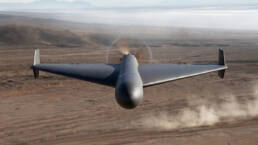
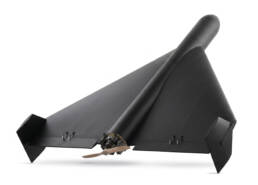
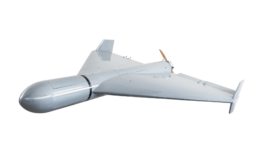
The AY>136C Replica is a full-scale target drone engineered to replicate the Shahed-136 threat profile while delivering a cost-effective and operationally flexible alternative to conventional aerial target systems.
The platform addresses a key capability gap in current inventories: the need for a realistic, full-scale threat surrogate that combines affordability, reusability, and mission adaptability within a single system.
02
The AY-136C Replica is designed to support a dual-use operational model, enabling its employment across both non-destructive and destructive mission profile.
→ Reusable target platform
For tracking, interception training, and system validation, maximizing asset utilization across multiple sorties.
→ Expendable target(mission-dependent)
For hard-kill validation, warhead effectiveness, and lethality assessment.
This dual capability allows operators to rationalize fleet composition, reducing reliance on separate reusable and expendable target systems.
⸻ Operational Advantage
1
Full-Scale Threat Geometry
A single platform enabling both reusable training operations and expendable test scenarios, optimizing cost, realism and operational flexibility.
The AY>136C Replica enables a wide range of training, testing and validation activities requiring a full-scale, high-fidelity loitering munition surrogate,
with the added benefit of platform reusability when mission profiles allow.
2
Scalable. Autonomous. Training-Ready.
→ Air Defence Training & Interception
→ Hard-Kill Validation & Lethality Testing
→ Sensor & System Performance Evaluation
→ Test & Evaluation Campaigns
→ Reusable Target Operations
→ Swarm & Multi-Target Scenarios
Replica
AY>136C
Technical Datasheet
01 / [ AIRFRAME ]
Wingspan
2.5 m
Airframe Material
Carbon composite
Configuration
Fixed-delta wing loitering type
Landing Gear
Fixed with steering capability
02 / [ PERFORMANCE* ]
EnduranceCeilingMax SpeedMax Takeoff Weight
4 hrs3000m180 kph80 kg
Max RangeOperating SpeedDash SpeedPayload Capacity
500 km150 kph250 kph20 kg
03 / [ LAUNCH & RECOVERY ]
04 / [ PROPULSION & SIGNATURE ]
Take-Off MethodTake-Off DistanceLanding Method
Take-off from runway / Pneumatic launcher250 mConventional / Parachute + Airbag
Engine TypeEngine Power
Two-stroke, Four cylinder with Starter23 hp
05 / [ Flight & Mission ]
Flight Modes
Navigation System
Mission Profiles
Swarm Capability
Manual, Assisted, Fully autonomous based on GPS waypoints
GNSS / INS
Waypoints, Loiter, Attack profiles, Custom
Pre-programmed multi-unit Deployment
©2026
ALL RIGHTS RESERVED
NOTE: Specifications are subject to environmental factors, aircraft configurations, and flight mission profile.
OUR PRODUCTS PURCHASES INCLUDE COMPREHENSIVE AFTER-SALE ASSISTANCE.CONTACT US TODAY TO BOOK A FLIGHT DEMONSTRATION! THIS PRODUCT, TRADEMARK AND NAME IS UNDER PATENT APPLICATION.
* Weather conditions will create variability in performance specifications. For example, strong tailwinds can result in aircraft range that exceeds current advertised product specifications. Similarly, headwinds and other environmental factors can reduce aircraft range below what is currently advertised.
AVAILABLE IN NDAA VERSION FOR US MARKET
**Release dates vary by payload
AY-136W Replica
AY>136W
TAKE OFF, LOCK ON, STRIKE...
AND REPEAT.
Replica
Replica
AY>136W
REAL SHAPE.
BUILT FOR SCALE.
Train against the threat that
reshaped modern air defense.
01
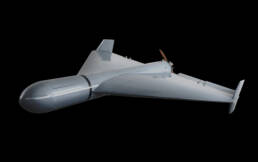
The AY>136W Replica is a full-scale, cost-efficient surrogate of the Shahed-136, engineered for high-frequency C-UAS training, detection system validation, and large-scale live-fire exercises.
Main Features
Designed to replicate the visual, acoustic, and operational signature of the real-world loitering munition that reshaped modern warfare, it enables realistic and scalable threat simulation.
The AY-136W Replica removes the cost and complexity barriers of traditional high-fidelity targets, enabling continuous, high-volume training and system validation against realistic loitering munition threats.
02
Whether used as an expendable target or a recoverable training drone, the AY>136W REPLICA delivers real-world threat behavior in a format that is safe, scalable, and field-proven.
⸻ Operational Advantage
1
Full-Scale Threat Geometry
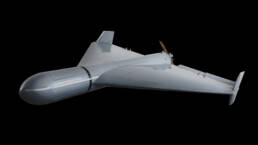
1:1 replication of the Shahed-136 ensuring realistic visual, radar, and acoustic signatures for detection and tracking validation.
Configurable radar cross-section through optional Lüneburg lenses, enabling tailored signature profiles for advanced detection system testing.
2
Autonomous Mission Execution
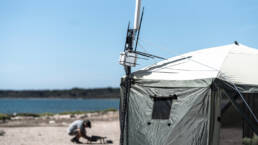
Fully autonomous takeoff, flight, and landing with pre-programmed mission profiles, enabling repeatable training scenarios with minimal operator input.
3
Optimized for Detection & Training Applications
Designed specifically for detection, tracking, AI training, and operator readiness—ideal for high-volume C-UAS development environments.
AY>136W
Technical Datasheet
01 / [ AIRFRAME ]
Wingspan
2.5 m
Airframe Material
Wood + Fiberglass structure
02 / [ PERFORMANCE* ]
EnduranceCeilingMax Speed
60 mins3000 m180 kph
Max RangeMax Takeoff WeightMax Payload Capacity
150 km40 kg10 kg
03 / [ LAUNCH & RECOVERY ]
04 / [ PROPULSION & SIGNATURE ]
Take-Off MethodTake-Off DistanceLanding Method
Take-off from runway / Pneumatic launcher100 mConventional landing
Engine TypeEngine Power
Two-stroke, Two cylinder with Starter12.5 hp
©2026
ALL RIGHTS RESERVED
NOTE: Specifications are subject to environmental factors, aircraft configurations, and flight mission profile.
OUR PRODUCTS PURCHASES INCLUDE COMPREHENSIVE AFTER-SALE ASSISTANCE.CONTACT US TODAY TO BOOK A FLIGHT DEMONSTRATION! THIS PRODUCT, TRADEMARK AND NAME IS UNDER PATENT APPLICATION.
* Weather conditions will create variability in performance specifications. For example, strong tailwinds can result in aircraft range that exceeds current advertised product specifications. Similarly, headwinds and other environmental factors can reduce aircraft range below what is currently advertised.
AVAILABLE IN NDAA VERSION FOR US MARKET
**Release dates vary by payload
AY-44Q Zombie
AY>44Q
TAKE OFF, LOCK ON, STRIKE...
AND REPEAT.
Zombie
Zombie
AY>44Q
TAKE OFF, AND REPEAT.
Reusable training asset that paysfor itself, mission after mission.
01
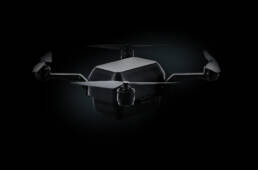
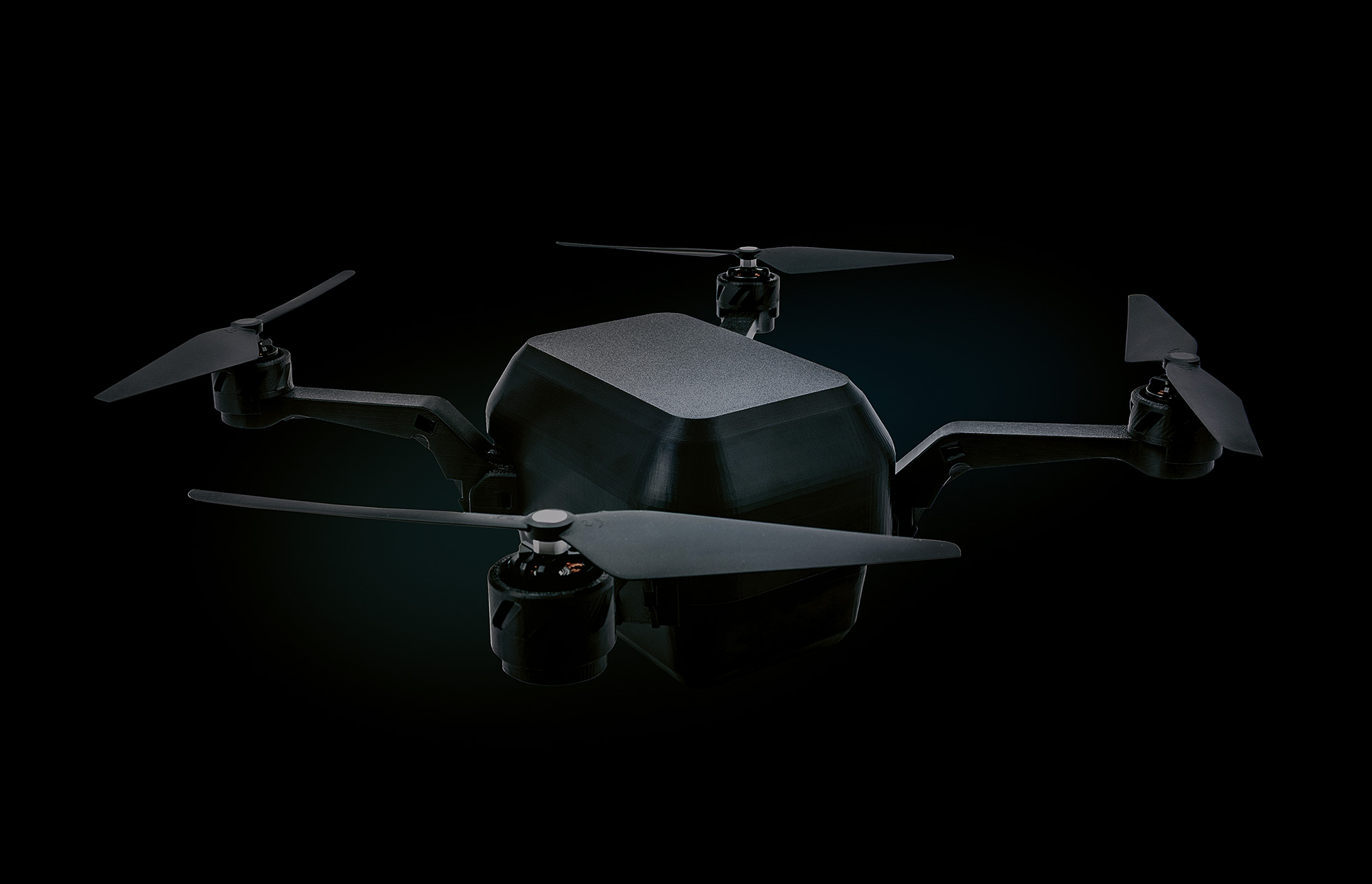
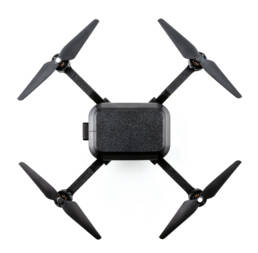
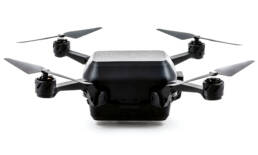
AY-44Q Zombie is a reusable multirotor target drone designed to replicate real-world UAS threats for C-UAS training and validation.
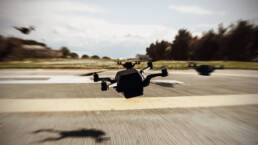
Lightweight, aggressive, and reusable, it delivers realistic threat simulation without sacrificing cost-efficiency or operational tempo.
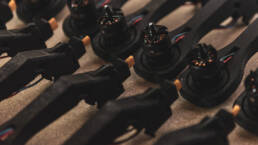
Its dual-shell chassis and breakaway arms are designed to absorb impacts while protecting critical internal systems—GNSS, electronics, avionics, and power units.
Unlike traditional target drones, Zombie can be refurbished and reused, making it the only drone in its class optimized for scalable, high-frequency training.
02
AY-44Q “Zombie” slashes per-mission costs by preserving the most expensive components, even after damage. Its modular architecture allows fast replacement of broken parts and redeployment in minutes. Ideal for intensive training campaigns, test ranges, or force-on-force simulation, it delivers a balance of realism, expendability, and savings.
⸻ Operational Advantage
1
Smart Target. Real Training Value.
↳ C-UAS Training with Kinetic Countermeasures
↳ Pilot Training in High-Risk Scenarios
↳ Sensor Validation & System Calibration
↳ Red Teaming & Adversary Simulation
↳ Swarm & Saturation Scenarios

2
Crashable. Reusable. Mission-Ready.
↳ Impact-Tolerant Dual-Shell Airframe
↳ Breakaway Arm System
↳ Simple Mission Planning Interface
↳ Autonomous & Assisted Flight Modes
↳ Swarm-Ready with Independent Programmable Mission Profiles
↳ Surprise & Saturation Training Capability
↳ Rapid Field Repair & Turnaround
↳ Flexible Payload & Datalink Options
3
→ Manual Pilot Mode
Single-unit operation with full pilot control for dynamic maneuvering, intercept simulation, and real-time engagement training in unpredictable scenarios.
→ Autonomous Mission Mode (Single Unit)
Pre-programmed autonomous flight with configurable waypoints and behaviors, enabling repeatable, operator-light training scenarios without manual piloting.
→ Swarm Autonomous Mode
Coordinated multi-unit operations with independently programmed mission profiles, enabling synchronized or unpredictable swarm behaviors for saturation, ambush, and advanced C-UAS training
From controlled flights to unpredictable swarm threats.
One platform.
Three levels of operational complexity.
AY>44Q
Choosing AY-44Q Zombie means investing in a platform that is field-tested and combat-ready. With hundreds of units in service, this drone is flying today in Europe and the U.S., trusted by leading defense players. It is entirely designed and built in Italy, backed by a dedicated engineering team, and supported with direct technical assistance and customization capabilities.
Technical Datasheet
01 / [ AIRFRAME ]
Dimension
377 x 377 x 156 mm
Airframe Material
Full 3D Printed
02 / [ PERFORMANCE* ]
Max Flight TimeCruise SpeedMax Speed
22 mins15 m/s19 m/s
Max RangeMax Takeoff WeightMax Payload Capacity
3 km (limited to datalink)1.56 kg0.5 kg
03 / [ CONTROL & COMMUNICATIONS ]
04 / [ ENVIRONMENTAL ]
Control RangeDatalink OptionsVideo Transmission
3 kmWi-Fi, BLE, LoRa, 2.4 / 5 GHzAnalog / FHD / 4K
Max Wind ResistanceOperating Temperature RangeMax Service Ceiling (A.S.L.)
25 m/s-10° / 50° c3000 m
©2026
ALL RIGHTS RESERVED
NOTE: Specifications are subject to environmental factors, aircraft configurations, and flight mission profile.
OUR PRODUCTS PURCHASES INCLUDE COMPREHENSIVE AFTER-SALE ASSISTANCE.CONTACT US TODAY TO BOOK A FLIGHT DEMONSTRATION! THIS PRODUCT, TRADEMARK AND NAME IS UNDER PATENT APPLICATION.
* Weather conditions will create variability in performance specifications. For example, strong tailwinds can result in aircraft range that exceeds current advertised product specifications. Similarly, headwinds and other environmental factors can reduce aircraft range below what is currently advertised.
AVAILABLE IN NDAA VERSION FOR US MARKET
**Release dates vary by payload
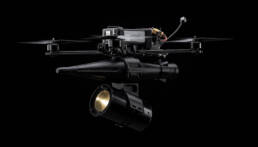
AY-100 FPV Effector
AY>100
TAKE OFF, LOCK ON, STRIKE...
AND REPEAT.
FPV Effector
FPV Effector
AY>100
DESIGNED TO CLOSE THE MISSION. ENGINEERED FOR PERFORMANCE.
Trained to push boundaries.
Ready to be automated or networked.
01
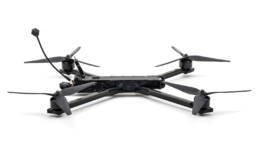
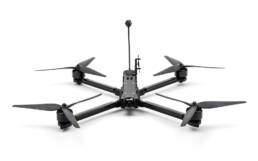
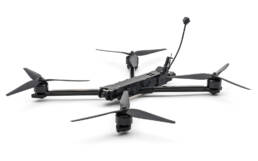
The AY-100 FPV is a next-generation heavy FPV drone designed for high-speed, high-payload, real-world tactical scenarios.
Powered by oversized 55A ESCs and optimized for both one-way and two-way missions, it offers an extended 30 km operational range and up to 3.5 kg payload capacity — enabling long-range strikes, tactical delivery, and advanced ISR capabilities.
Built for forward deployment.Trained to push boundaries.Ready to be automated or networked.
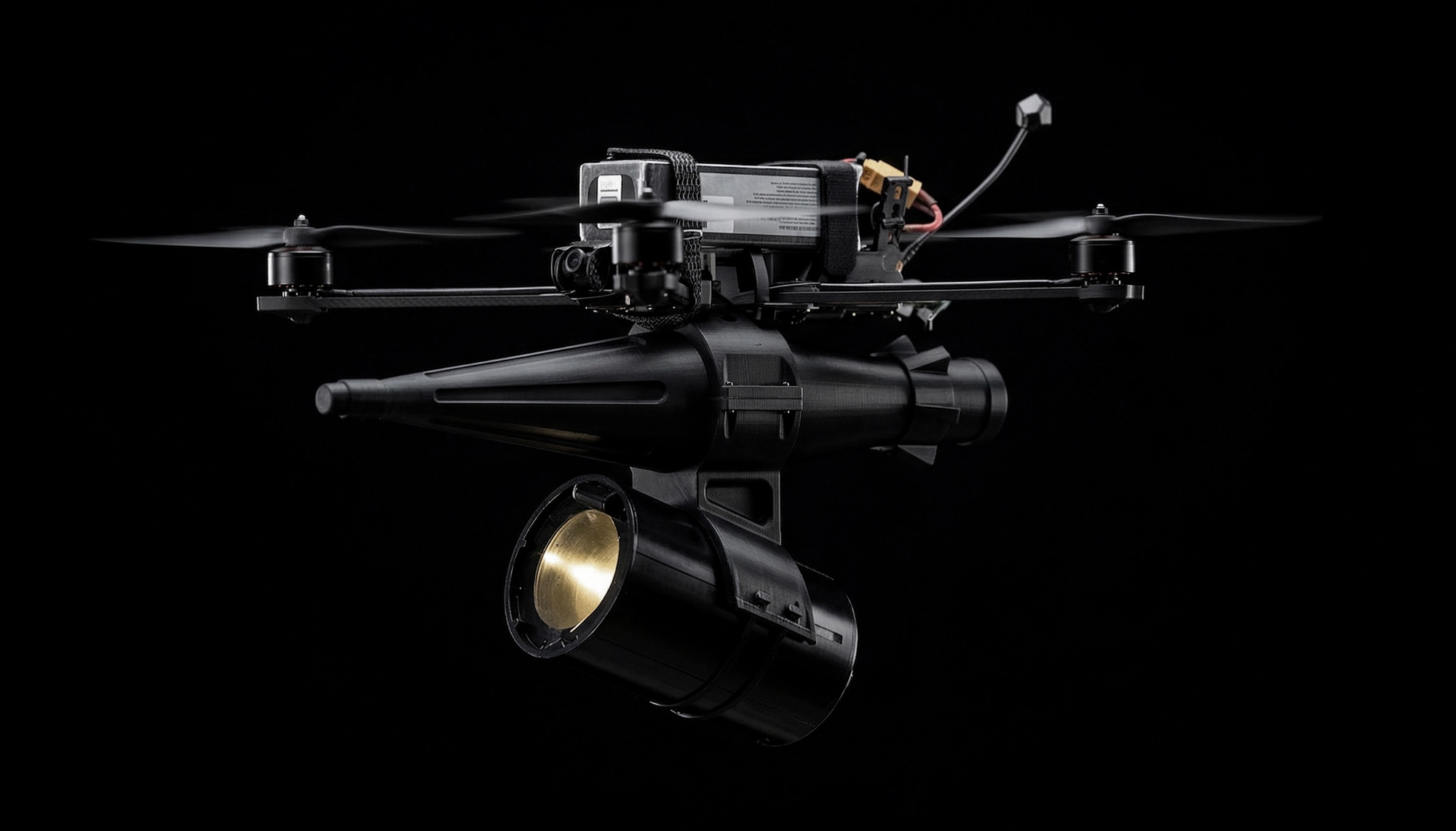
→ Strong & Insidious
Every component — from reinforced carbon frame to AI-ready avionics — is engineered for flight stability, low EMI, and precise response under duress.
→ Tactical Precision
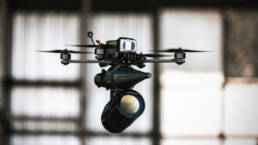
Whether carrying tactical payloads, drop pods, or breaching tools, it maintains stability and energy deep into potentially contested zones.
With up to 3.5 kg payload and 120 km/h top speed, the AY-100 FPV enables precision delivery missions far beyond standard FPV ranges.
⸻ Operational Advantage
1
Precision Delivery Operations
→ Configurable for kinetic or inert loads
→ Stable cruise at 80 km/h for up to 25 minutes
→ Supports autonomous delivery paths or FPV manual flight modes.
Relay & Network Extension
→ Multi-band comms (868, 900 MHz, 2.4 / 5 GHz).
→ 4G/5G and mesh-ready radio integration.
→ Programmable waypoint or loitering relay logic.
Anti-Aircraft Engagement (C-Uas)
→ Ideal for sacrificial intercept missions.
→ Thermal seeker or AI visual tracker optional.
→ Manual override via TBS/ELRS for direct control kills.
2
Integrated Avionics or Payload (opt. on request)
→ Up to high precision multi-constellation GNSS RTK.
→ Ultra-Wide Band (UWB) devices.
→ Analog, digital video transmitter (different powers).
→ Analog, digital camera (OpenIPC OS compatible), or thermal.
→ AI companion computer Lite.
Datalink (opt. on request)
→ Main control and telemetry frequency bands: 5 GHz / 2.4 GHz / 900 MHz / 868 MHz / 433 MHz, and others.
→ Main drone control type: ELRS or TBS.
→ MANET MESH radio, 4G/5G.
→ Satellite communication.
→ LoRa, LoRaWAN modules.
→ Data encryption AES 128 / 256 bits.
Navigation modes
→ Up to 20 (Waypoint, Loiter, Position Hold, GoTo, GoHome, Return to Pilot, etc.).
→ Automatic emergency procedures.
→ Programmable SWARMING flight missions (**).
3
Navigation
→ Optional Denied GNSS/GPS Navigation and Complex Environment.
→ Optional Map matching / Terrain Following.
Gladius
AY>100
Built for forward deployment. Trained to push boundaries. Ready to be automated or networked.
Technical Datasheet
01 / [ AIRFRAME ]
Dimension
340 x 300 x 90 mm
Airframe Material
Carbon composite
02 / [ PERFORMANCE* ]
Max. Flight Time (*)Maximum one-way rangeMax. Cruise Speed (*)Max. Service Altitude (A.M.S.L)
Up to 25 minUp to 30 km120 km/h (~33 m/s)3000 m
Operational range with payload (round trip)Cruise Speed (*)Operating altitudeOp. Temp. Range
Up to 20 km80 km/h (~22 m/s)50 – 300 m-10 to +40 °C
©2026
ALL RIGHTS RESERVED
NOTE: Specifications are subject to environmental factors, aircraft configurations, and flight mission profile.
OUR PRODUCTS PURCHASES INCLUDE COMPREHENSIVE AFTER-SALE ASSISTANCE.CONTACT US TODAY TO BOOK A FLIGHT DEMONSTRATION! THIS PRODUCT, TRADEMARK AND NAME IS UNDER PATENT APPLICATION.
* Weather conditions will create variability in performance specifications. For example, strong tailwinds can result in aircraft range that exceeds current advertised product specifications. Similarly, headwinds and other environmental factors can reduce aircraft range below what is currently advertised.
AVAILABLE IN NDAA VERSION FOR US MARKET
**Release dates vary by payload
FPV & C-UAS Training
The knowledge base for mastering modern military drone tactics.
↳ Rebooting Aerospacein the Autonomy age
As FPV drone technology rapidly evolves and becomes a critical component of modern warfare, the need for specialized training and counter-drone expertise has never been greater. Military forces worldwide are integrating FPV drones into their operations, utilizing them for surveillance, reconnaissance, and even tactical strikes. Simultaneously, the rise of unmanned aerial threats requires advanced counter-UAS systems capable of neutralizing these threats in real-time.
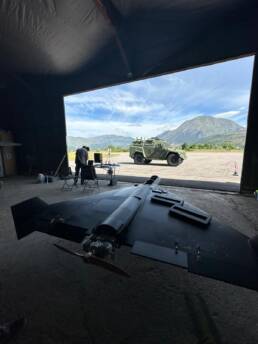
In response to these growing demands, we are launching Italy’s first FPV Military Training Center, aimed at developing a new generation of drone operators and C-UAS specialists who can meet the challenges of modern combat. This center will serve as a hub for training, testing, and technological advancement, setting a new standard in military readiness and drone warfare tactics.
— A
Military FPV School
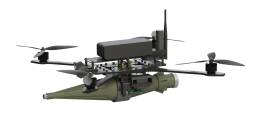
Our FPV training program is designed specifically for military personnel, equipping them with the skills to pilot FPV drones with precision and confidence.
This hands-on training focuses on both the operational and tactical use of FPV drones in military scenarios, ensuring soldiers can effectively integrate these technologies into their missions. Utilizing proprietary drones and cutting-edge technologies developed in-house, we offer immersive training experiences that enhance situational awareness and tactical execution.
— B
C-UAS School
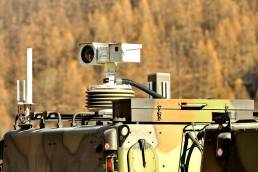
The C-UAS School prepares military personnel to counter the growing threat of unmanned aerial systems.
Our program covers the principles of drone detection, identification, and neutralization using proprietary Counter-UAS technologies. Trainees learn how to leverage autonomous systems and AI-driven solutions to protect critical infrastructure and dismounted troops from hostile drones, providing real-world experience in handling and mitigating drone threats.
— C
C-UAS System Testing and Qualification
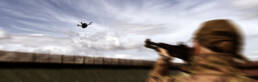
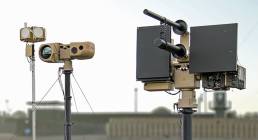
We provide comprehensive testing and qualification services for C-UAS systems such as radar, shotgun systems, and other counter-drone technologies. Using our proprietary drone targets, technologies, and procedures, we simulate real-world drone threats to rigorously test and validate the performance of C-UAS solutions. Our approach ensures that military teams and defense contractors can assess the effectiveness of their systems in diverse operational scenarios, enhancing their readiness to counter evolving drone threats.
What makes our training competitive
— D
Electromagnetic Interference (EMI) and Jammer Resistance Testing:
↳ We simulate scenarios with electromagnetic interference and test the resistance of C-UAS and autonomous drone systems against jamming devices. This service assesses the systems’ ability to operate in high-interference environments or under jamming attacks.
— E
Operational Endurance and Reliability Testing:
↳ We evaluate the endurance and reliability of systems during prolonged operations. This includes testing how systems perform under extreme conditions (e.g., high temperatures, humidity) to ensure consistent functionality over time.
— F
Kinematic Performance and Agility Testing:
↳ We conduct tests to assess the maneuverability and agility of systems in complex operational scenarios, such as urban environments or confined spaces. This service is particularly valuable for autonomous drones and anti-drone systems responding to fast-moving threats.
— G
Precision Detection and Tracking System Testing:
↳ We test the accuracy and reliability of detection and tracking sensors in C-UAS systems, such as radar and thermal cameras, across various operational scenarios and against different UAV threat types.
— H
Cybersecurity and Penetration Testing:
↳ Our cybersecurity testing ensures that C-UAS and autonomous systems are resilient against hacking attempts, spoofing, or network infiltration, safeguarding critical data during operations.
— I
Extreme Environmental Conditions Testing:
↳ We evaluate the performance of drones and C-UAS systems in extreme environments (e.g., polar temperatures, deserts, open seas) to ensure they can operate effectively under harsh weather and environmental conditions.
— J
Kinematic Performance and Agility Testing:
↳ We simulate operational scenarios to test the effectiveness of drone neutralization systems, such as electronic warfare devices or shotguns, verifying their ability to disable hostile drones without causing collateral damage.